Donkeys
The Adventures of PinocchioDonkeys occupy two contrasting roles in the Land of Toys: they draw the wagon that carries boys there, and they are what the boys themselves become after months of play without work. The transformation makes the country’s apparent freedom costly: the boys who flee lessons and teachers end up as animals to be sold, trained, and made to perform.
The Wagon and the Land of Toys
The wagon arrives without a sound, its wheels muffled with straw and rags. Twelve pairs of Donkeys draw it: twenty-four animals of one size but many colors, including gray, white, brown and black, and some marked with large yellow and blue stripes. Their feet are shod not with iron but with laced leather shoes like boys’ shoes. That detail makes the team an unsettling introduction to a place where the boundary between boy and donkey will not hold.
The wagon reaches the Land of Toys toward dawn. Its population is entirely boys, from about eight to fourteen years old, and its streets resound with games, shouting, trumpets, and imitations of animals. Boys play marbles, hopscotch, ball, tag, and circus; elsewhere they ride bicycles or wooden horses, turn somersaults, and march with cardboard soldiers. Small wooden theaters fill the squares, while charcoal slogans celebrate the country and reject arithmetic and school. Pinocchio, Lamp-Wick, and the other arrivals explore the place and quickly become friends with its inhabitants. The welcome seems to confirm the promise of a life without lessons, but the wagon team’s boy-like shoes quietly foreshadow what that life conceals.
Transformation into Donkeys
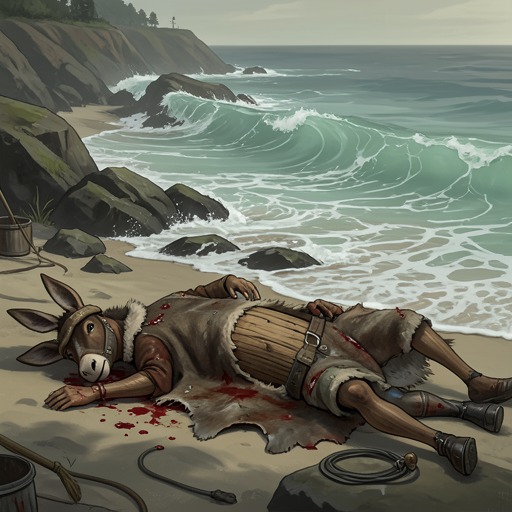
After five months of play, Pinocchio wakes to find the change beginning. When he asks what is happening, the Dormouse explains that within two or three hours he will be neither a puppet nor a boy, but a real donkey. Pinocchio grasps his long ears and pulls at them as though they belonged to someone else. The change is at once bodily and moral in the Dormouse’s account: boys who hate books, schools, and teachers, and spend all their time at play, are destined to become Donkeys. The warning that what has been done cannot be undone gives the transformation the force of a consequence already set in motion, rather than a sudden accident.
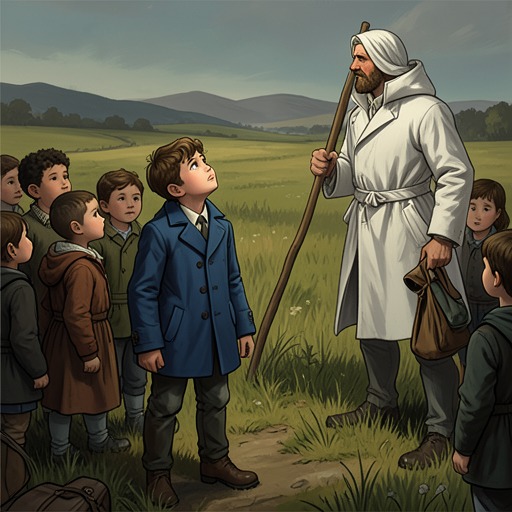
The Little Man has made that consequence into a business. He seeks out boys who are lazy, tired of school, eager to run away from home, or hostile to books; he takes them to the Land of Toys and lets them play to their hearts’ content. After months without work, they turn into little Donkeys, which he sells in the market. The narrative states that he has become a millionaire through this trade. His friendly-looking manner therefore masks a system of exploitation: the boys’ apparent freedom is the interval in which they are being prepared for sale.
Sale, Training, and Display
The Little Man first pets and grooms the transformed Pinocchio and Lamp-Wick, smoothing their coats and working them over with a currycomb until they shine. He then bridles them and takes them to a distant market. Lamp-Wick is bought by a farmer whose donkey has died the previous day; Pinocchio goes to a circus owner who intends to train him for tricks. The same market thus sends the two former companions into different kinds of service: farm labor for Lamp-Wick, and public entertainment for Pinocchio.
Pinocchio’s new master makes him learn to jump, bow, dance a waltz and a polka, and stand on his head. The training lasts three months and costs many lashings before he is declared ready. His first public appearance is advertised in large posters as a spectacle featuring famous performers and horses, with Pinocchio singled out by name as a famous donkey. The animal body that once signaled punishment for idleness is now an attraction sold to an audience. The sequence connects the Little Man’s private act of capture to a public economy of training, advertising, and applause.
Recognition and Narrative Significance
During Pinocchio’s circus performance, he sees a beautiful woman wearing a gold chain and a medallion bearing the picture of a puppet. He recognizes the woman as the Fairy and tries to call out to her. The moment brings his former identity into view inside the donkey spectacle: the trained animal is still Pinocchio, and he recognizes the person associated with his earlier life even when he can no longer speak to her as he once did.
The Donkeys therefore mark a reversal in the story’s idea of freedom. The Land of Toys seems to release boys from school, discipline, and work, but that release leads not to lasting independence but to transformation, sale, and compulsory labor. The wagon’s strange leather shoes, the boys’ eventual animal bodies, the currycomb and bridle, and the circus poster trace a progression from foreshadowing to possession and display. Through that progression, the Donkeys are not merely a comic consequence of misbehavior: they make visible the cost of a world in which play is separated from responsibility and exploited by someone who profits from the boys’ refusal to grow up.